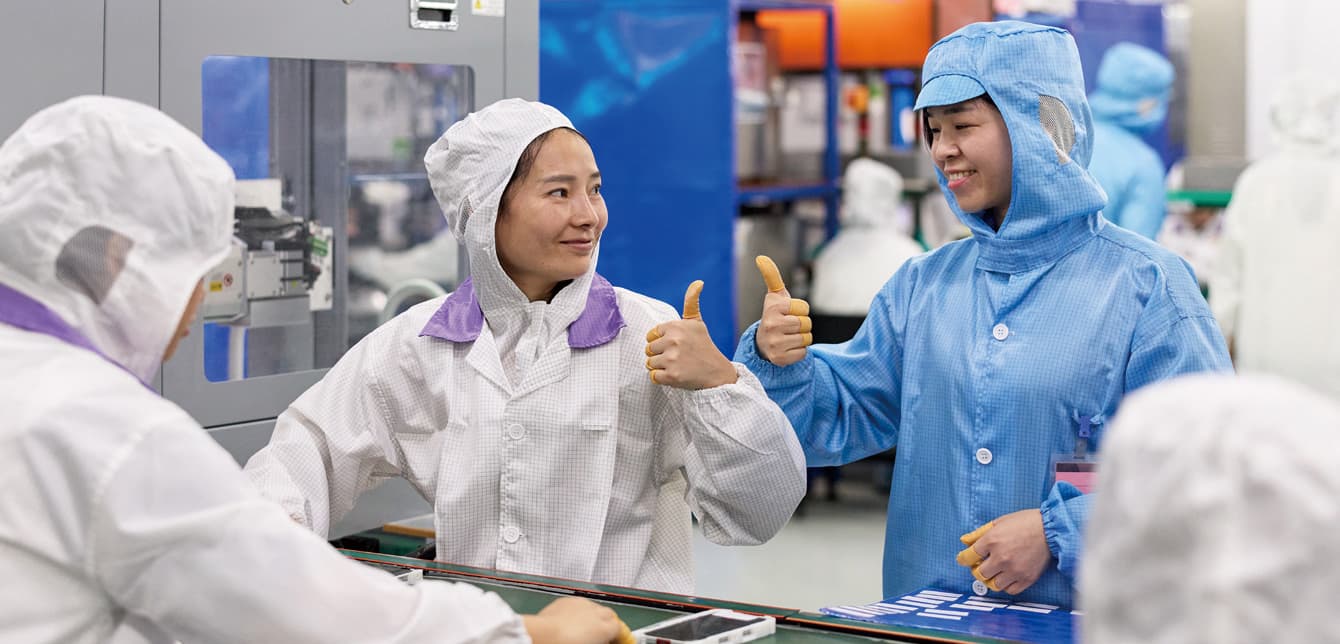
Quality control was the first important part of my work when I started my career, and it has remained part of my entire professional life.
My first job started with product quality management. I began with incoming material inspection, then carried out random inspections while staying at factories, and later inspected finished products. As I became involved in more products and production projects, I gradually developed a deeper understanding of quality control.
“ Inspection is used to find problems that have already happened. The more important value of quality control is to judge where problems may happen and make the necessary preparations before production begins. ”
Products are made by people. As long as production involves manual work, material processing, and several production steps, there will always be some differences and errors. It is very difficult to completely avoid problems during production.
What we can really do is use our understanding of the product, materials, processes, and production flow to judge which steps are most likely to have problems, and make plans and preparations for these risks in advance.
In this way, even if a problem really happens, we can quickly find the cause, control its impact, and make adjustments before the problem becomes bigger. We do not have to wait until mass production is finished and then deal with rework, rejected products, delays, and delivery risks.
However, to do this, the person responsible for product development and production management must truly understand how the product is made.
If a person does not understand materials and production processes, lacks real experience at production sites, or has never personally observed how a product is completed on the production line, it will be difficult for that person to identify risks during the development stage.
After many years of experience in product development, production follow-up, and quality management, I have gradually concluded that product quality can be controlled through the following areas:
1. Improve Production Files Based on Information from the Sampling Stage
The purpose of sampling is not only to confirm the final appearance of the product. More importantly, it allows us to find details in the design drawings that are not suitable for production through actual manufacturing.
Some designs may look fine in the drawings, but when they enter actual production, they may be difficult to produce consistently and may easily cause a high defect rate during mass production. When this happens, I will make suitable improvements to the dimensions, structure, or process details in the production files based on the problems found during sampling.
These improvements do not change the original design or the overall appearance of the product. The purpose is to make the production method more reasonable and the production process more stable while keeping the appearance as unchanged as possible. This helps reduce production difficulty and the defect rate during mass production.
2. Prepare Extra Materials in Advance for Machine Setup and Production Loss
When preparing production materials, I do not purchase materials only based on the required quantity of finished products. I also calculate the normal material loss that may happen during machine setup, trial production, and the production process according to the specific production method.
For example, during wooden box production, some machines use a certain amount of material every time they are adjusted or tested. If I expect the machine to be adjusted five times and each adjustment may use about twenty pieces of material, I will prepare one hundred extra pieces in advance for machine adjustment and process confirmation.
If there are not enough materials prepared at the beginning and the shortage is discovered later, we may need to purchase materials again, arrange the machines again, adjust the machines again, and carry out additional production. A small shortage of materials may interrupt the whole production process and add extra time and cost.
In comparison, including the expected production loss when preparing materials for the first time is more convenient and helps production continue without interruption. It also prevents a small material shortage from affecting the delivery of the whole project.
3. Inspect Parts Before They Enter the Next Production Step
Before the product enters the next production step, I will inspect the parts that are going to be used, especially those that are difficult to remove or replace after assembly.
For example, if the metal hardware on a wooden box is not inspected before assembly, and deformation, scratches, functional problems, or other issues are only found after installation, the loss may be more than just one piece of hardware when it needs to be removed and replaced.
Hardware assembly is usually close to the final stage of wooden box production. Removing the hardware by force can easily cause further damage to the surface, installation holes, or the overall structure of the wooden box. It may even cause the whole finished product to be rejected.
Therefore, instead of inspecting the finished product after assembly, it is better to inspect and select the parts before they enter the assembly process. This allows the problem to be controlled at the stage where the cost is lowest and the issue is easiest to handle. It also prevents one defective part from affecting the whole product.
4. Confirm Key Processes Before Starting Full Production
I previously developed a leather book box set. Before the leather entered the cutting process, it had already gone through several processes, including gold stamping, creasing, and UV printing.
In this situation, the result of every key process must be confirmed before mass production is arranged. For example, if the creasing position is not confirmed correctly before cutting begins, and the wrong position is only found after all the materials have been cut, the completed gold stamping, creasing, UV printing, and the whole batch of leather materials may all have to be rejected.
In this case, we not only need to prepare the materials again, but also repeat all the earlier production processes. This can cause a very large loss of time and cost.
“ Therefore, key processes should not be checked only after they are completed. They must be confirmed before full production begins, so that a problem in one step does not make all the earlier work useless. ”
5. Learn About the Biggest Production Difficulties from Frontline Workers
At the beginning of mass production, I actively communicate with frontline workers to understand which step is the most difficult, takes the most time, and is most likely to cause errors.
Because the workers carry out these operations every day, they usually understand the real difficulties on the production line better than anyone else. After finding these problems, I will consider whether a simple fixture can be designed to make the operation easier.
For example, in one previous parts assembly process, the workers could only judge the installation position by eye. This was not only inefficient, but also made it difficult to ensure that the position was exactly the same on every product.
Later, I designed an acrylic positioning fixture. The workers only needed to place the product and the part inside the fixture. The reserved position in the fixture was the correct assembly position, so they no longer needed to repeatedly adjust it by eye.
This not only made the workers’ operation easier, but also improved assembly efficiency, product yield, and the consistency of the whole batch.
6. Increase the Inspection Frequency at the Beginning of Mass Production
When mass production first begins, the workers are usually handling the product for the first time. They are not yet fully familiar with the operating method, process requirements, or quality standards, so this is the stage when problems are most likely to happen.
Therefore, at the beginning of production, I increase the frequency of on-site random inspections. This allows me to quickly find differences or mistakes in the workers’ operations and correct them as soon as possible, preventing the same problem from continuing and affecting more products.
As production gradually moves into the middle stage, the workers become more familiar with the product and their operations become more stable. If the results of several inspections continue to meet the requirements, the inspection frequency can gradually return to the normal level.
This strengthens control during the highest-risk stage while maintaining a reasonable inspection schedule after production becomes stable.
7. Actually Use the Product from the Consumer’s Point of View
When judging product quality, many people only consider the materials, structure, and production process. However, they forget that the product will finally be used by consumers.
The product will not always stay in a sample room or on a shelf. After consumers buy it, they will use it in different environments and situations. These real conditions may also affect the product.
Therefore, I put myself in the position of the consumer and actually use the product. I think about how it will be used, what kind of environments it may face, and whether these situations may reveal problems that were not found during development and production.
“ Only by placing the product in real usage situations can we find quality risks that are difficult to see by only checking its appearance and production quality. ”
8. Establish a Full Inspection Center Based on the Product Positioning
Whether a product needs a full inspection depends on the positioning and quality requirements of the product itself.
For some ordinary products or disposable products, clients may be able to accept a certain percentage of minor defects. Therefore, random inspection is usually enough to control the overall quality.
However, I have mainly worked on IP collectible products for many years. These products have higher prices, and consumers have stricter requirements for details. Even a very small scratch, stain, or assembly defect may damage the completeness of the whole product and affect the consumer’s collecting experience.
Therefore, for the products I manage, relying only on random inspections at the factory is not enough. I establish an independent full inspection center in China and send all the products there. Every product is inspected one by one before packaging. Products with problems are selected and handled before final packaging and shipment are arranged.
Full inspection may not be suitable for every product. However, for collectible products that have high value, strict detail requirements, and cannot accept visible defects, it is a very important final step for protecting the quality of the delivered products.
“ In general, the main way I control product quality is to identify possible risks in advance and make preparations for these risks before they happen. ”
Professional quality management means finding problems as early as possible, keeping the impact under control when a problem happens, and preventing a small and manageable problem from becoming a serious loss that cannot be recovered.
Over the years, this working method has allowed me to control most product problems during the development stage and at the beginning of production. It has also helped me avoid many quality risks that could have developed into major losses.
This has also allowed the projects I manage to complete production and delivery successfully, while the final product results often exceed the client’s original expectations.
The points above clearly show that problems can easily happen at every stage of product development and production. Therefore, it is extremely important to have someone who can follow the entire process and handle all these details for you. It is also because I can do this that I am able to continue delivering IP collectible products with extremely high quality requirements.